


Fire Suppression Systems For Commercial & Institutional Factilities in Baltimore & Washington DC
When Seconds Matter, E&F Contracting's Fire Suppression Systems Excel
When your project requires a dependable, code-compliant fire suppression system, you need a contractor who understands more than just the hardware—you need a team that can coordinate trades, protect schedules, and deliver an inspection-ready installation in active, high-stakes environments. E&F Contracting provides fire suppression system installation services as part of our Institutional & Commercial general contracting work, supporting new construction, renovations, and facility upgrades throughout Maryland and the surrounding region. From preconstruction planning to final acceptance testing, we help owners, facility managers, and project teams move confidently from design to a fully functioning life-safety system.
Fire suppression is not a “set it and forget it” scope. It touches architecture, structural elements, mechanical systems, electrical controls, ceiling systems, and often the day-to-day operations of the building. In schools, healthcare facilities, government buildings, multi-tenant commercial spaces, and industrial environments, the margin for error is essentially zero. E&F Contracting approaches fire suppression installations with the mindset of a general contractor first: we plan for access, phasing, ceiling and wall closures, above-ceiling coordination, penetrations, inspections, and documentation—so the system is installed correctly, tested properly, and turned over cleanly.
Fire Suppression Installation for New Builds, Remodels, and Occupied Facilities In Baltimore & Washington DC
Whether you’re building from the ground up or retrofitting an existing space, the demands change—but the expectations don’t. On new construction projects, fire suppression installation is driven by early coordination and disciplined execution. Pipe routing, elevation planning, and head layout must align with structural framing, ductwork, lighting, and ceiling grids. E&F Contracting coordinates sequencing so your sprinkler rough-in and trim-out happen at the right time, minimizing rework and ensuring the system matches the final ceiling and finish conditions.
For remodels and tenant improvements, the work often becomes more complex. Existing systems may need extensions, relocations, or modifications to meet new layouts or occupancy changes. Sometimes a space that once served a low-hazard use is being reconfigured into a higher-demand environment, requiring design updates and potential equipment changes. E&F Contracting manages the work so the right scopes are addressed upfront—demolition impacts, temporary protection, shutdown planning, ceiling removal and replacement, and schedule alignment with other trades.
In occupied buildings, safety and continuity are everything. Phased work, after-hours scheduling, dust control, and clear communication become just as important as the installation itself. We plan shutdowns carefully, coordinate with facility teams, and help maintain code compliance during transitions so your operations can continue with minimal disruption.


What E&F Contracting Brings to Fire Suppression System Installation in Maryland
As an Institutional & Commercial general contractor, E&F Contracting focuses on the bigger picture that determines whether a fire suppression project succeeds. The best installation in the world still fails if inspections aren’t scheduled correctly, if ceiling closure happens too soon, or if system modifications aren’t documented for final signoff. Our process is built to prevent those issues.
We begin with preconstruction coordination that clarifies responsibilities, identifies long-lead items, and aligns the fire suppression scope with the overall construction plan. This includes reviewing phasing requirements, access limitations, ceiling and soffit plans, and any special facility considerations such as infection control protocols, security clearance needs, or restricted work windows.
During construction, we manage field coordination so piping, hangers, bracing, and head locations are installed cleanly and consistently with the approved plan. We keep an eye on the details that frequently cause rework: conflicts above ceilings, unexpected structural conditions, changes in reflected ceiling plans, and late decisions on lighting or HVAC diffusers. Because fire suppression is a life-safety system, the finish standard matters—straight runs, correct elevations, proper clearances, and a professional look that matches the environment, whether that’s a public corridor or an industrial bay.
Finally, we support testing and closeout with the documentation and coordination required for successful inspections. Acceptance testing, punch list resolution, ceiling touch-ups, labeling, and as-built documentation all matter when you’re nearing substantial completion. E&F Contracting stays engaged through the finish line so owners and inspectors see a system that’s complete, functional, and ready for occupancy.

Contact us for a FREE estimate!


Fire Suppression is a Coordination Project as much as an Installation Project
Fire suppression work rarely lives in isolation. It threads through almost every construction scope—especially in institutional buildings where ceiling congestion is common and space is at a premium. E&F Contracting prioritizes coordination with mechanical, electrical, framing, drywall, and ceiling systems so the project flows. That means aligning rough-in windows, confirming ceiling heights, anticipating soffits and bulkheads, and planning inspections so you don’t get stuck waiting on one final item that should have been handled weeks earlier.
We also understand that institutional stakeholders require clarity. Schools, municipalities, medical facilities, and property management teams often need consistent updates, tight scheduling, and safe, orderly jobsites. Our team works to keep communication clear and decisions documented, reducing last-minute surprises and keeping the project moving.
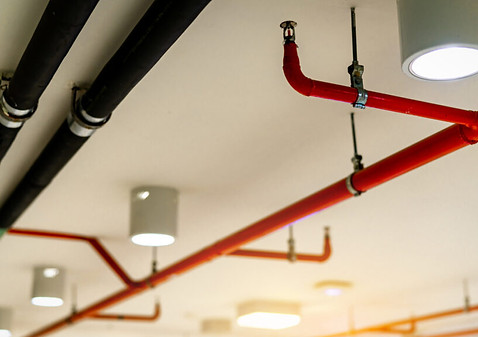

A Fire Suppression Installation You Can Sign Off on With Confidence
At the end of the day, your fire suppression system installation needs to meet code, pass inspection, and support the long-term safety of the building. E&F Contracting delivers fire suppression scope with the same standards we bring to our institutional and commercial general contracting projects: planning, coordination, quality execution, and a reliable closeout process. If you’re preparing for a new build, renovation, or phased upgrade, we’re ready to help you install a system that’s built to perform—and built to pass.
FAQ: Fire Suppression System Installation Services In Baltimore, Washington DC, or Frederick
What types of buildings does E&F Contracting support with fire suppression installation?
We support institutional and commercial projects including schools, municipal facilities, healthcare-related spaces, offices, warehouses, retail, and multi-tenant properties—both new construction and renovations.
Can you install fire suppression systems during an occupied renovation?
Yes. We frequently plan phased work and coordinated shutdowns to help reduce disruption. We prioritize safety, scheduling, and clear communication with facility teams throughout the process.
Do you handle coordination with other trades and ceiling systems?
Yes. Fire suppression installation depends heavily on above-ceiling coordination. We manage sequencing and coordination so sprinkler routing, head placement, ceiling closure, and inspections align.
Can you modify or expand an existing fire suppression system during a remodel?
Absolutely. Many renovation projects require relocating heads, extending piping, or updating portions of the system to match new layouts or occupancy needs. We help manage the construction-side coordination required for those changes.
What is included in closeout for a fire suppression installation project?
Closeout typically includes coordinating final testing/acceptance activities, addressing punch items, supporting required inspections, and ensuring documentation and as-builts are properly collected for turnover.
How early should fire suppression planning start on a commercial or institutional project?
As early as possible—ideally during preconstruction. Early coordination helps avoid conflicts with HVAC, lighting, structure, and ceiling plans, and reduces the chance of rework later in the schedule.